
When we talk about workplace safety, we usually focus on the things we can see—forklift movements, trip hazards, or working at heights. But there is a permanent, life-changing injury that happens quietly every day: noise-induced hearing loss.
.jpeg?width=1087&height=400&name=Untitled%20(58).jpeg)
It can happen gradually over time with repeated exposure to loud machinery and equipment or suddenly with a one-time exposure to an extremely loud noise like an explosion; either way, the result is the same irreversible damage.
As a Health and Safety Manager at SGW World, my role goes beyond simply issuing hearing protection such as earplugs. It involves assessing employees’ exposure to noise emissions, implementing procedures to eliminate or reduce noise exposure so far as reasonably practicable, and ensuring that appropriate hearing protection is provided in line with the identified noise levels and the individual needs.
- Control the Source, Not Just the Person
The biggest mistake in noise management is jumping straight to Personal Protective Equipment (PPE). Ear defenders or earplugs should be our last line of defence, not our first.
Our first step is to reduce noise wherever we can. Can we move a noisy compressor into a separate room? Can we use soundproofing or acoustic shrouds around machinery? Can we rotate employees’ tasks to reduce individual exposure times? Even basic tool maintenance makes a massive difference-a rattling, unlubricated or old machine is significantly louder than a well-maintained one. If we cannot reduce its noise, we isolate it.
- The Danger of "Over-Protecting"
It sounds odd, but you can actually provide too much hearing protection. If a worker wears a high level of hearing protection in an area that only requires moderate protection, this creates new risks. They can’t hear warning alarms, moving vehicles, or colleagues alerting you of an incident.
The goal is to hit the "sweet spot"-reducing noise to a safe level, typically around 70-80 dB(A) at the ear without cutting the wearer off from what is happening around them.
- Knowing Your Numbers
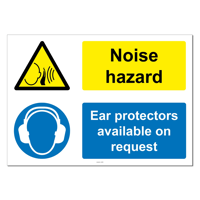
We can’t manage what we don’t measure. That is why third-party occupational noise exposure assessments are vital. They provide an objective map of the site, identifying where noise levels may pose a risk to hearing, even when they don’t exceed the legal threshold for mandatory hearing protection. These areas are established with advisory signage to encourage employees to wear hearing protection as a precautionary measure, helping to prevent hearing loss over time.
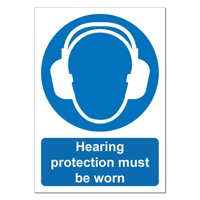
Mandatory hearing protection zones are designed; these areas are demarcated with signs indicating that hearing protection must be worn.
Exposure assessments feed directly into our Risk Assessments and Method Statements (RAMS). It’s not just paperwork; it is the blueprint for how we keep our team safe during a specific task.
.jpeg?width=642&height=350&name=Untitled%20(55).jpeg)
- Supporting the Individual
Everyone’s hearing is different, and for those who wear hearing aids, standard ear defenders might not always be suitable. We work closely with Occupational Health Assessors to regularly monitor our team’s hearing through routine hearing tests. This approach helps us spot any changes early, rather than waiting until an issue develops. We also encourage our employees to report any changes or concerns about their hearing as soon as possible.
- It Starts Before You Enter
Protection should not be an afterthought. We ensure hearing protection is available before you enter a noisy zone. If you have to walk into a high-decibel area to find your PPE, the damage is already being done.
.jpeg?width=642&height=350&name=Untitled%20(56).jpeg)
The Bottom Line
Noise isn't just a nuisance; it’s a health risk. Whether it’s internal machinery or environmental noise affecting our neighbours in Crewe, we have a responsibility to manage it properly.
Businesses and employees must treat hearing protection as vital because once you lose your hearing, it won’t come back.
The Legal Bit: What the Law Says
In the UK, noise isn't just a matter of "best practice"-it is a legal requirement. The Noise Regulations aim to protect workers' hearing from excessive workplace noise, which could lead to permanent hearing loss and/or to suffer from tinnitus (permanent ringing in the ears).
|
Noise Level |
What the Law Requires |
|
80 Decibels (dB) |
The Lower Exposure Action Value. We must carry out a formal risk assessment, provide training on noise risks, and make hearing protection available for anyone who wants it. |
|
85 Decibels (dB) |
The Upper Exposure Action Value. At this level, hearing protection is mandatory. We must designate "Hearing Protection Zones" with clear signage and provide regular Occupational Health hearing checks. |
|
87 Decibels (dB) |
The Exposure Limit Value. This is the "hard ceiling." No employee is allowed to be exposed to noise above this level (once the protection from their ear defenders is factored in). |
For further reading visit the HSE noise pages here: Noise at work